The design of our cities stems from long-standing patriarchal power systems that govern urban development, influence financial allocation, compound social inequality, and subjugate women. These inequalities are further amplified at nighttime. Within a patriarchal planning system, how can we design safe, inclusive and accessible urban spaces which remain agile to the demands of all genders?
ReadIn this article, Kate Crowley continues our mini-series ‘Drafting Identity’ which focuses on the experience of women in Architectural Education from both personal and professional perspectives, supporting the FIAE movement. Kate discusses ‘crit culture’ in architectural education and the impact that dynamic has on women, in particular.
ReadIsabel Hamilton reviews Francis Matthews’ recent exhibit, EXT/INT, at the Molesworth Gallery, Dublin.
ReadOveruse and misuse of 'participatory' terms to describe design processes with limited stakeholder power has devalued these terms, and led to scepticism around the processes described. In deciding how to maintain, repair, and retrofit Dublin's social housing complexes, it's imperative that residents are meaningfully included in decision making, and doing so begins with open, accessible communication, argues Irene Barrenetxea Arriola.
ReadAll journals and books are free to download for Type members; please login or use the download button for access.
Non-members can purchase items from the library on a one-off basis or become a member of Type to avail of the full benefits of membership.

Beginning in 1972, the RIAI Bulletin was a monthly newsletter to inform Institute members of the wide range of matters with which the RIAI was involved.

This paper explains the nature of dimensional deviation in prefabricated elements and that the development of designs should include a clear approach to accommodate or control deviations when they do occur.

This publication documents a 1983 colloquium concerned with the need for an Irish national strategic plan to provide the physical, economic, and social infrastructure required by the end of the 20th century.

Architectural Survey was an annual review of contemporary architecture in Ireland, which ran from 1953-1972.

2ha #05 considers the relationship between language and suburban space. Three essays respond to the fractured process of translation that has come to define the territory of suburbia.

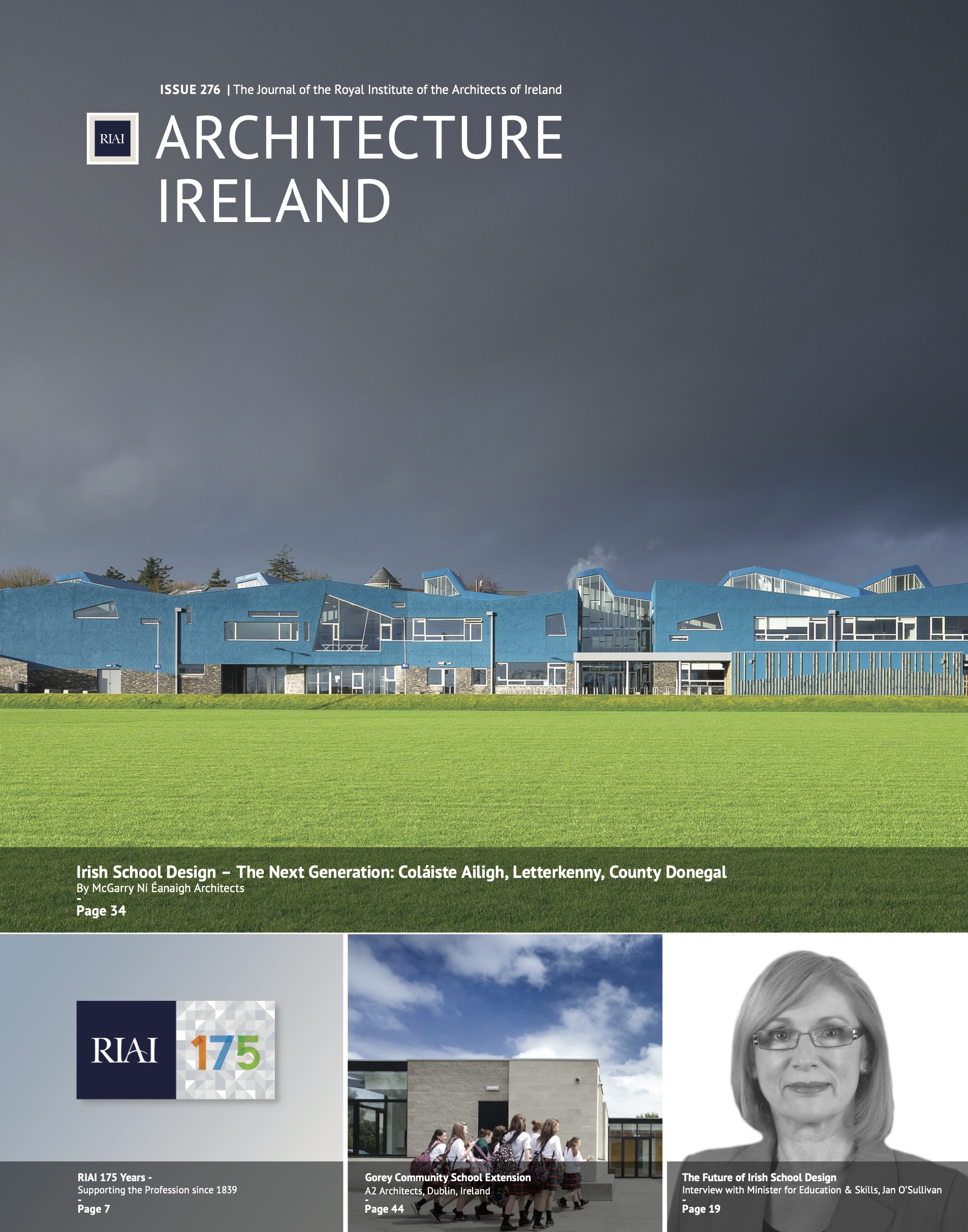
Architecture Ireland is the journal of the Royal Institute of the Architects of Ireland. Issue #278 focuses on the theme of ‘a year of architecture - 2015’.

Architectural Survey was an annual review of contemporary architecture in Ireland, which ran from 1953-1972.
Read more
Architecture Ireland is the journal of the Royal Institute of the Architects of Ireland. Issue #280 focuses on the theme of ‘restoration, reuse and adaptation’.
Read more
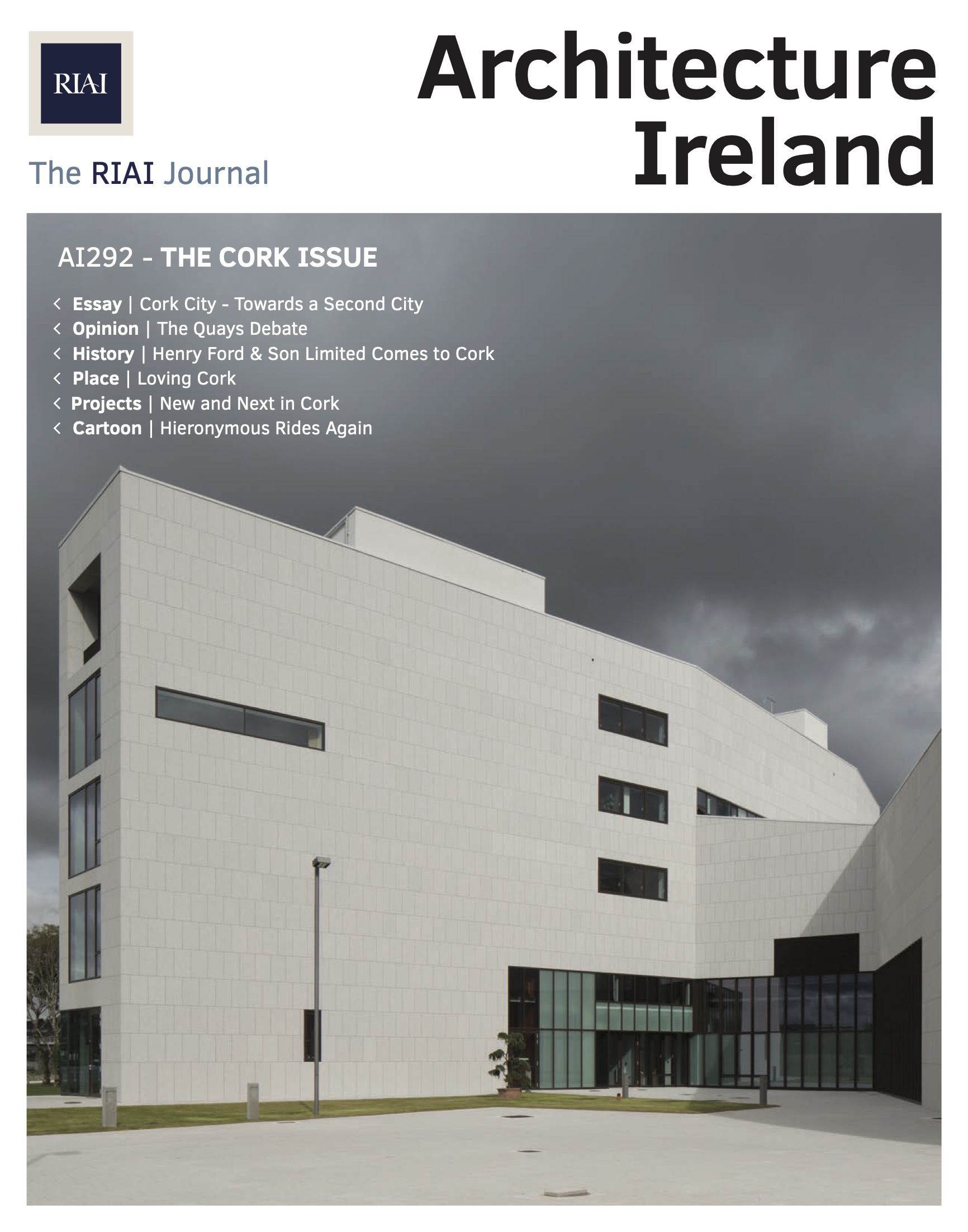
Architecture Ireland is the journal of the Royal Institute of the Architects of Ireland. Issue #318 focuses on the theme of 'Belfast'.
Read more
Beginning in 1972, the RIAI Bulletin was a monthly newsletter to inform Institute members of the wide range of matters with which the RIAI was involved.
Read more
Beginning in 1972, the RIAI Bulletin was a monthly newsletter to inform Institute members of the wide range of matters with which the RIAI was involved.
Read more
Architectural Survey was an annual review of contemporary architecture in Ireland, which ran from 1953-1972.
Read more
This working paper documents research undertaken to discover residents’ views on their housing environments to identify those elements associated with overall satisfaction and to make such information available to designers and policy makers.
Read more
An annual yearbook featuring student work from the Dublin School of Architecture, TU Dublin.
Read more
UTOPIA 7 is a published a study of utopian settlements in Ireland by students in the Dublin School of Architecture.
Read more
This paper reports on a study investigating aspects of housing estates related to the pedestrian precinct or residential yard concept.
Read more
This publication documents a 1983 colloquium concerned with the need for an Irish national strategic plan to provide the physical, economic, and social infrastructure required by the end of the 20th century.
Read more
Jointly published by the Housing Resarch Unit at the School of Architecture in University College Dublin and Cement-Roadstone Holdings Ltd., Back to the Street records Dublin inner-city housing at the beginning of the 1980s and proposes a strategy of urban renewal through the provision of housing to deal with city dereliction and decay.
Read moreType involves a collective of writers, researchers, and editors with expertise in architecture, landscape architecture, urban design, and planning.
We’re interested in working with individuals and organisations to gather, format, and disseminate knowledge on the built environment.
Have a potential project in mind? We are always open to new ideas and the possibility for collaboration. Please use the form provided to get in touch.

Website by Good as Gold.